You've got 200 applicants for one role. You can't interview them all live. You can't screen them from a CV alone either.
That's where async video interviews come in. Candidates record their answers on their own time. You review them on yours. No scheduling, no calendar tennis, no wasted 30-minute calls with people who aren't the right fit.
This guide covers how they work, when to use them, what questions to ask, and when they're not the right call.
What is an async video interview?
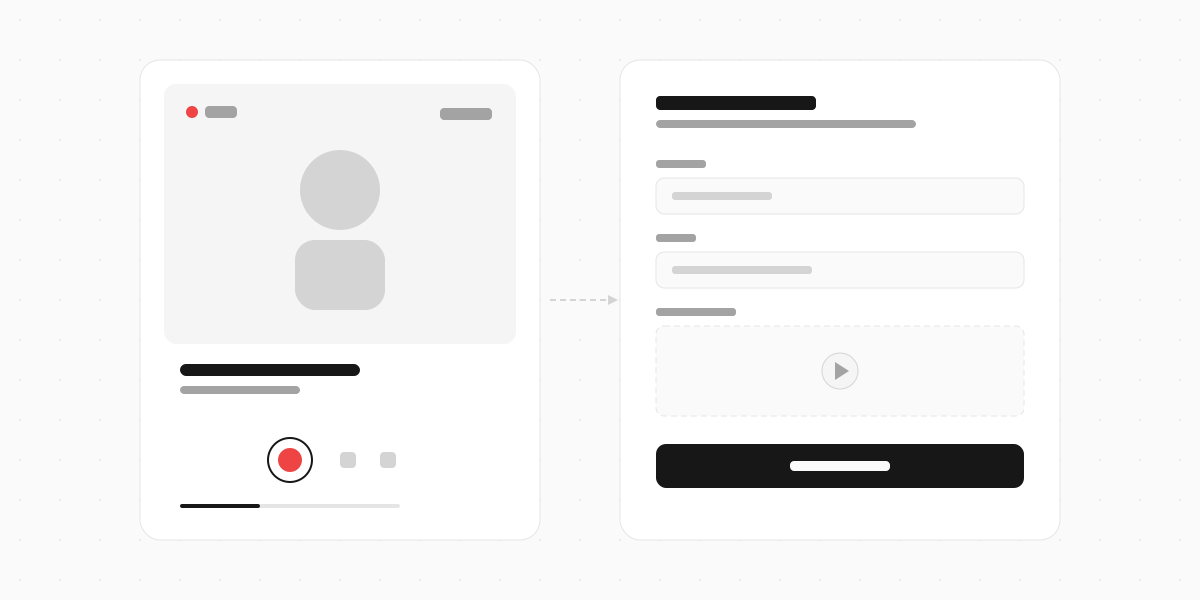
An async video interview (also called a one-way video interview) is a recording-based interview format. You set up a list of questions. Candidates get a link, record their answers on camera, and submit. You watch the recordings whenever you're ready.
There's no live call. No scheduled time slot. Both sides do their part when it suits them.
It's different from a Zoom interview in the same way a voice note is different from a phone call. Same information, different timing.
How it works
The process is simple:
- You create the questions. Write or record your prompts. Most tools let you do either text or video questions (video prompts work better - more on that below).
- You share a link. Candidates get a single URL. No accounts, no downloads, no friction.
- Candidates record answers. They see each question one at a time. They get a short window to think, then record. Most platforms give 1-3 minutes per answer.
- You review on your schedule. Watch at 1x or 2x speed. Compare candidates side by side. Share with your team.
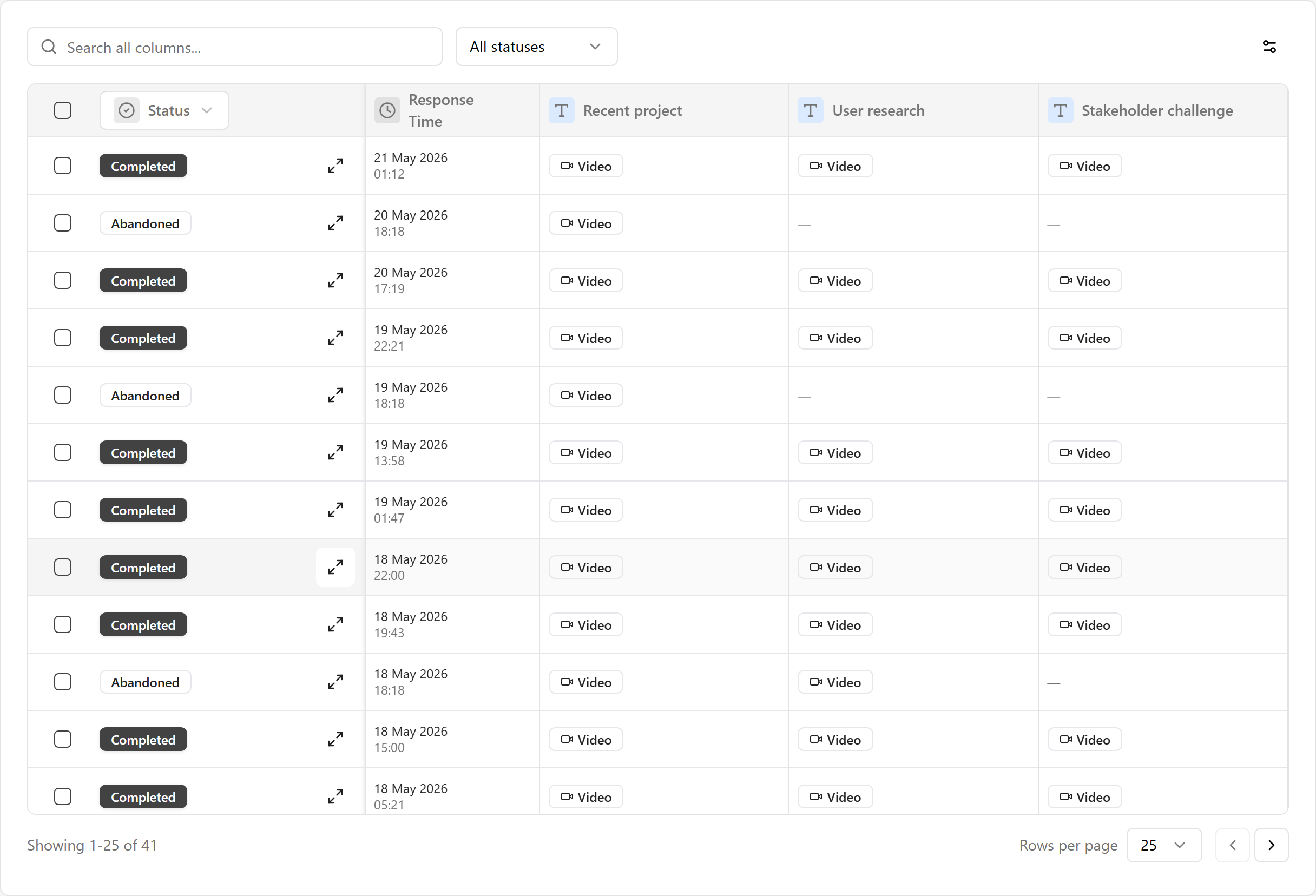
The whole thing takes 10-15 minutes for the candidate. Review takes 3-5 minutes per person (especially at 2x speed).
Why hiring teams use them
They save a huge amount of time
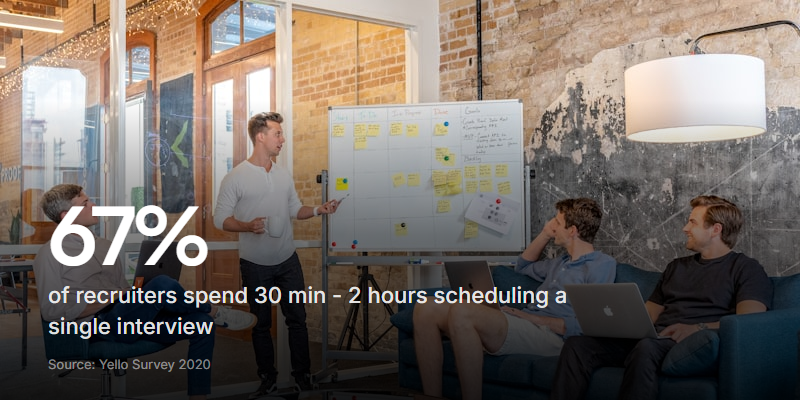
A 30-minute phone screen with 50 candidates is 25 hours of calls. Plus scheduling. Plus rescheduling. Plus no-shows. According to a Yello recruiter survey, 67% of recruiters spend 30 minutes to 2 hours just scheduling a single interview - before the conversation even starts.
An async screen with 50 candidates takes maybe 4 hours to review. No scheduling needed.
Every candidate gets the same questions
In a live interview, questions drift. You go off-script. You spend more time with people you click with. That's natural, but it makes comparison harder.
Async interviews fix this by design. Same questions, same format, same time limit. It's a fairer baseline.
You see the person, not just the CV
A CV tells you what someone's done. A video tells you how they communicate, how they think on their feet, and whether they'd be a good fit for your team.
This matters most for customer-facing roles, remote teams, and any job where communication skills are part of the job description.
Your team can review together
Instead of one person doing all the screening, everyone on the hiring panel can watch the same recordings. Leave comments. Flag favourites. Make decisions together without another meeting.
When async video interviews work best
They're not for every situation. Here's where they shine:
- High-volume roles - you're getting 50+ applications and can't phone-screen everyone
- Remote or distributed teams - candidates are in different time zones
- Early-stage screening - you want to narrow down before investing in live interviews
- Roles where communication matters - sales, support, teaching, management
- Standardised questions - you're asking the same qualifying questions to every applicant
When they're not the right choice
Be honest about the limitations:
- Senior or executive roles - candidates at this level expect a conversation, not a recording prompt. It can come across as impersonal (and you'll probably hear about it).
- Highly technical roles - if you need to see someone code live or solve problems in real time, async doesn't work.
- Small candidate pools - if you only have 5-10 applicants, just do a live call. The time saving isn't worth the tradeoff.
- Candidate experience matters more than speed - some people really dislike recording themselves. If your employer brand depends on a warm, personal process, async screening might send the wrong signal.
If candidate experience is a concern, consider offering a choice - async video or a short live call. Giving candidates control over the format signals respect without sacrificing your screening efficiency.
The sweet spot is high-volume early screening. Use async to find your top 10, then switch to live interviews for the final rounds.
The AI factor
AI is changing async interviews from both sides.
Candidates now have access to tools that generate polished interview answers in seconds. Some are purpose-built for hiring - apps that listen to the question, draft an answer, and display it as a teleprompter overlay. In a live video call, this is hard to spot. In an async recording, it's even harder, because the candidate can rehearse and re-record until the AI-assisted answer sounds natural.
For employers, the temptation is to fight AI with AI - using automated scoring that analyses tone, facial expressions, and word choice. But this is exactly where regulation is tightening. Illinois now requires explicit consent before AI can analyse video interviews, with recordings deleted within 30 days on request. California, Colorado, and New York City have similar rules either active or taking effect by 2027.
The practical takeaway: use AI where it helps without risk (transcription, organising responses, translation) and keep humans making the actual decisions. The distinction between "AI that assists the process" and "AI that judges the candidate" is now the dividing line in hiring tech - and it's the line regulators are drawing too.
If you're using async video screening, check whether your state or country has specific rules about AI analysis of recorded interviews. The rules are changing fast.
What questions to ask
The best async interview questions are short, specific, and hard to fake with a rehearsed script.
Good starter questions
| Question | What it tells you |
|---|---|
| "Walk me through your last role in 60 seconds." | Communication clarity, conciseness |
| "What made you apply for this role specifically?" | Motivation, research effort |
| "Describe a problem you solved recently." | Problem-solving approach, specificity |
| "What's something you're genuinely good at?" | Self-awareness, confidence |
| "What would your last manager say is your biggest weakness?" | Honesty, self-reflection |
Questions to avoid
- Anything you could get from the CV. Don't ask "Where did you go to university?" when it's on the application.
- Overly broad questions. "Tell me about yourself" gets rambling answers. Be specific.
- Questions that need follow-up. Async is one-way. If the answer might need clarification, save it for the live round.
How many questions?
Keep it to 4-6 questions. More than that and completion rates drop off a cliff. Candidates who feel the process is too long will abandon it (and you'll lose good people).
How to set one up
You need two things: a list of questions and a tool to record them.
The simple version
- Write 4-6 questions based on the role
- Record a short video intro (30 seconds explaining the process and setting the tone)
- Set time limits per question (1-2 minutes is usually enough)
- Generate a link
- Add the link to your job listing or send it directly to applicants
- Review responses as they come in
Tips for better results
Record your questions as video, not just text. Candidates respond better when they can see and hear you first. It feels more human - and this single change probably has the biggest impact on completion rates.
- Keep the intro warm. "Hey, thanks for applying! This should only take about 10 minutes..." goes a long way.
- Set expectations in the job ad. Tell candidates there's a video screening step before they apply, not after.
- Watch at 2x speed. You'll get through reviews much faster and still catch everything that matters.
- Use a simple rubric. Score each answer 1-3 on the criteria that matter for the role. Don't overthink it.
What candidates need to know
If you're sending candidates through an async interview, help them do well. A bad experience reflects on your company, not just on them.
Include in your invite:
- How many questions there are
- How long it'll take (be honest)
- Whether they can re-record
- What you're looking for (communication, not perfection)
- That it's fine to use notes
Most candidates have never done one before. A short message like this makes a big difference to completion rates:
"Hi! You'll be asked 5 short questions on video. It takes about 10 minutes. You can re-record if you need to, and we're looking for clear communication - not perfection. Notes are absolutely fine."
Tools for async video interviews
There are dedicated platforms like Willo, HireVue, Spark Hire, and Hireflix. They're built specifically for recruitment teams and come with features like AI scoring, ATS integrations, and candidate tracking.
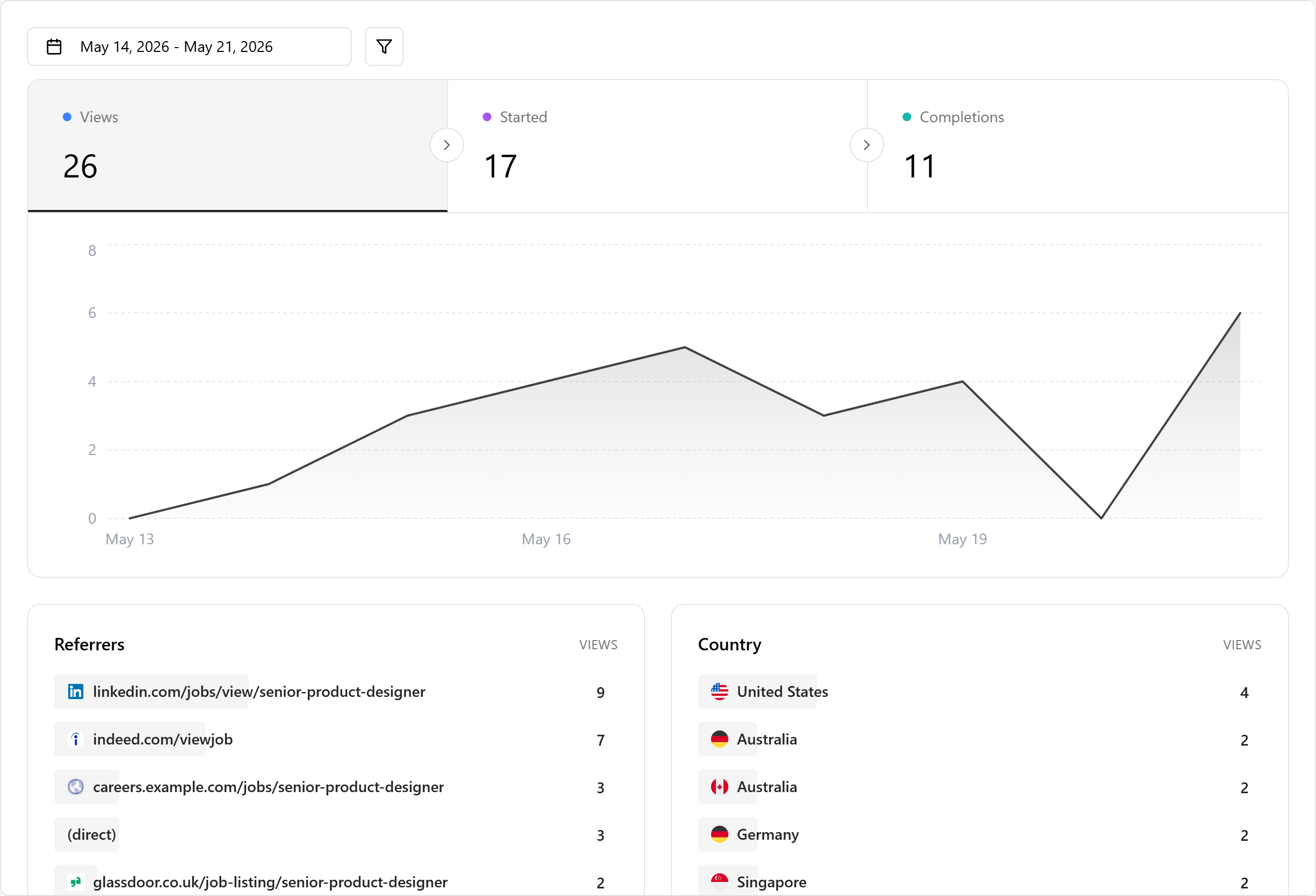
But you don't always need a full hiring platform. If you're a smaller team screening for one or two roles, a video form builder like Clipform does the job. You record your questions as video prompts, candidates respond on camera, and everything lands in one place. No accounts needed on either side.
The right tool depends on your volume. Hiring 500 people a year? You probably want a dedicated platform. Screening 20 applicants for a single role? A video form gets the job done with less setup.
Common mistakes
Making it too long. Every extra question loses candidates. Stick to what you actually need to make a decision.
No video intro. Text-only prompts feel cold. Record yourself for 30 seconds. It completely changes the experience.
Treating it as the final decision. Async screening is a filter, not a verdict. Use it to find people worth talking to, then have a real conversation.
Don't ignore accessibility. Some candidates may have disabilities that make video recording difficult. Always offer an alternative (written responses, live call option).
Not telling candidates what to expect. Surprising people with a video recording step after they've applied feels like a bait-and-switch.
FAQ
How long should an async video interview be?
4-6 questions, 1-2 minutes per answer. The whole thing should take a candidate 10-15 minutes max. Anything longer and your completion rates will tank.
Can candidates re-record their answers?
Depends on the tool. Some let candidates re-record as many times as they want. Others give one shot (or one retry). There's no right answer here - re-records give a more polished response, but single-take answers feel more natural and show how someone thinks on their feet.
Are async video interviews fair?
They're fairer than live screens in one specific way: every candidate gets the exact same questions, in the same order, with the same time limits. No interviewer bias from small talk or first impressions. That said, they do favour people who are comfortable on camera - so always offer an alternative for candidates who need one.
What's the difference between async and one-way video interviews?
Same thing, different name. "One-way video interview" just means the candidate records and you watch later. "Async" (asynchronous) means the same thing - both sides do their part at different times. You'll see both terms used interchangeably.
Is it worth it?
If you're screening more than 20 candidates for a role, yes. The time savings are real. The comparison is fairer. And you get signal you'd never get from a CV.
Just don't treat it as a silver bullet. It's one step in the process - a very efficient one - but it works best when combined with live interviews later.
The companies that get async interviews right use them to spend less time on the wrong candidates and more time with the right ones. That's the whole point.