Most customers don't leave reviews. Not because they don't like your product, but because nobody asked them properly. Or they were asked at the wrong time. Or the process was so clunky they gave up halfway through.
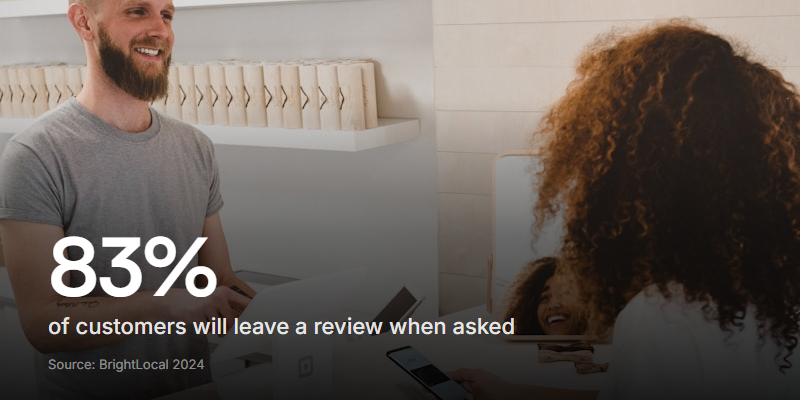
Here's the good news: BrightLocal's 2026 Local Consumer Review Survey found that 83% of consumers leave a review when asked. The problem isn't willingness. It's the ask.
This guide covers when to ask, how to ask, what channels work best, and why a short video request outperforms a generic email template every time.
Why reviews matter more than they used to
Reviews have always influenced buying decisions. But the bar is rising. BrightLocal's same 2026 survey found that 41% of consumers always read reviews before making a purchase decision - up from 29% just a few years ago. And 68% now require a business to have a 4-star rating or higher before they'll even consider it, up from 55%.
That means a handful of lukewarm reviews can actively hurt you. And no reviews at all is almost as bad as negative ones - it signals that nobody cares enough to talk about you.
The other shift is regulation. The FTC's fake reviews rule took effect in October 2024, and the first warning letters went out in December 2025. Buying reviews, incentivising positive reviews, or suppressing negative ones all carry real penalties now. The only reviews that count are genuine ones - which means you need a system for getting real customers to share their honest experience.
When to ask (timing is everything)
The biggest mistake is asking too late. A review request that shows up three weeks after a purchase is asking someone to remember how they felt. One that arrives right after a positive moment captures it fresh.
Best moments to ask:
- Immediately after a positive interaction - they just told your support team their problem was solved, they just completed onboarding, they just got a result they're happy with
- After a milestone - 30 days of using the product, completing their first project, hitting a goal
- After they've referred someone - if they're already recommending you to a friend, they'll likely say the same thing publicly
- After a repeat purchase - someone who buys twice is satisfied enough to articulate why
Worst moments to ask:
- During a support ticket (they're frustrated)
- Right after a price increase (they're annoyed)
- On the same day as a failed transaction or bug (they're irritated)
- In a generic batch email blast (they feel like a number)
One well-timed ask beats five poorly-timed ones. If someone just told you they love the product, that's your window. Don't wait for the automated email sequence to catch up.
How to ask: channels that work
Email (the default)
Email is the most common channel and the easiest to scale. But most review request emails are terrible. They're templated, impersonal, and easy to ignore.
What works:
- Short subject line that doesn't sound automated ("Quick favour?" beats "Please review your recent purchase")
- Personal - use their name, reference something specific about their experience
- One clear CTA - don't ask them to review on Google AND Trustpilot AND your website
- Make it easy - direct link to the review form, not a landing page with three more clicks
What doesn't:
- Long emails explaining why reviews are important to you (they don't care)
- Multiple asks in the same email
- Generic templates with
{FIRST_NAME}that obviously haven't been personalised beyond the merge field
Video requests (the underused channel)
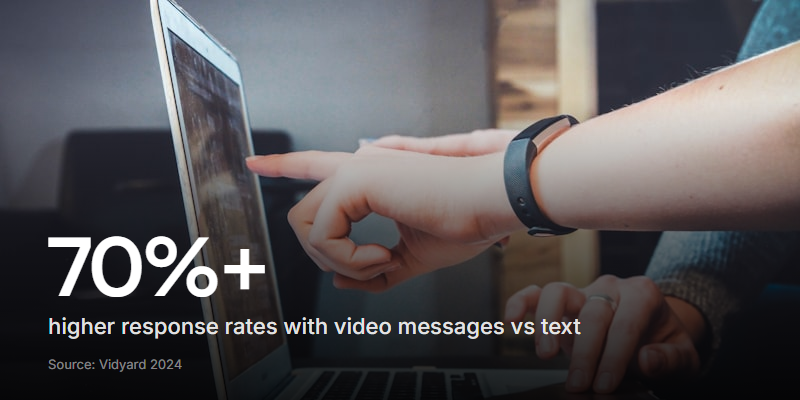
Here's where most businesses miss an opportunity. A Vidyard and Demand Metric study of over 600 sales leaders found that more than 70% reported video outperformed text-based emails for response rates.
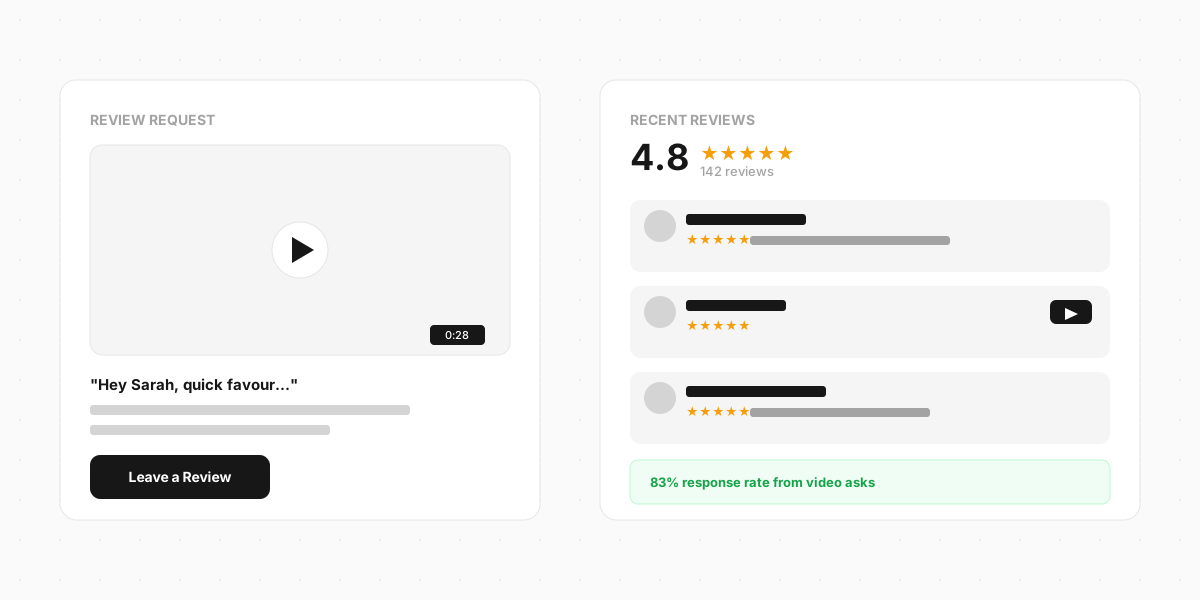
A 30-second video from a real person at your company - "Hey Sarah, thanks for being a customer for six months, would you mind leaving us a quick review?" - is harder to ignore than a templated email. It's personal. It's human. It creates a sense of reciprocity that text can't match.
You don't need professional production. A webcam recording from your desk is fine. The authenticity is the point.
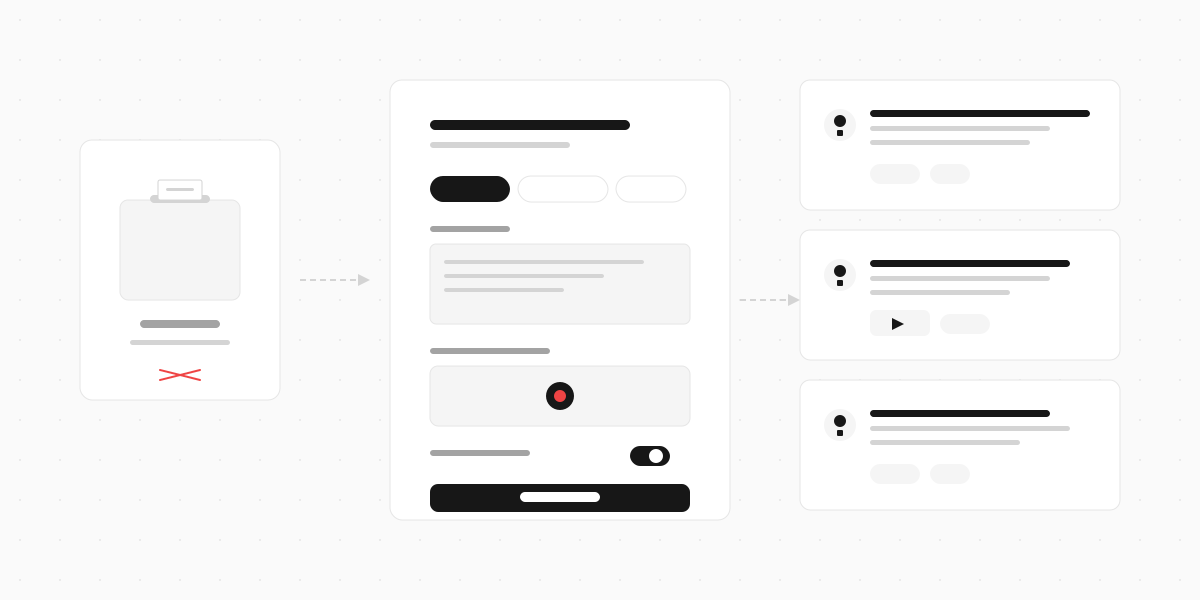
With a tool like Clipform, you can record a short video prompt asking for a review and share it as a link. The customer clicks, watches your video, and can leave their review right there - including recording a video review of their own if they prefer. No redirects, no friction, no "please visit this third-party site."
SMS / text message
Short, direct, high open rates. Works well for service businesses (restaurants, salons, tradespeople) where the customer has just had an in-person experience.
Keep it under 160 characters. Include a direct link. Send within 2 hours of the service.
In-person / at the counter
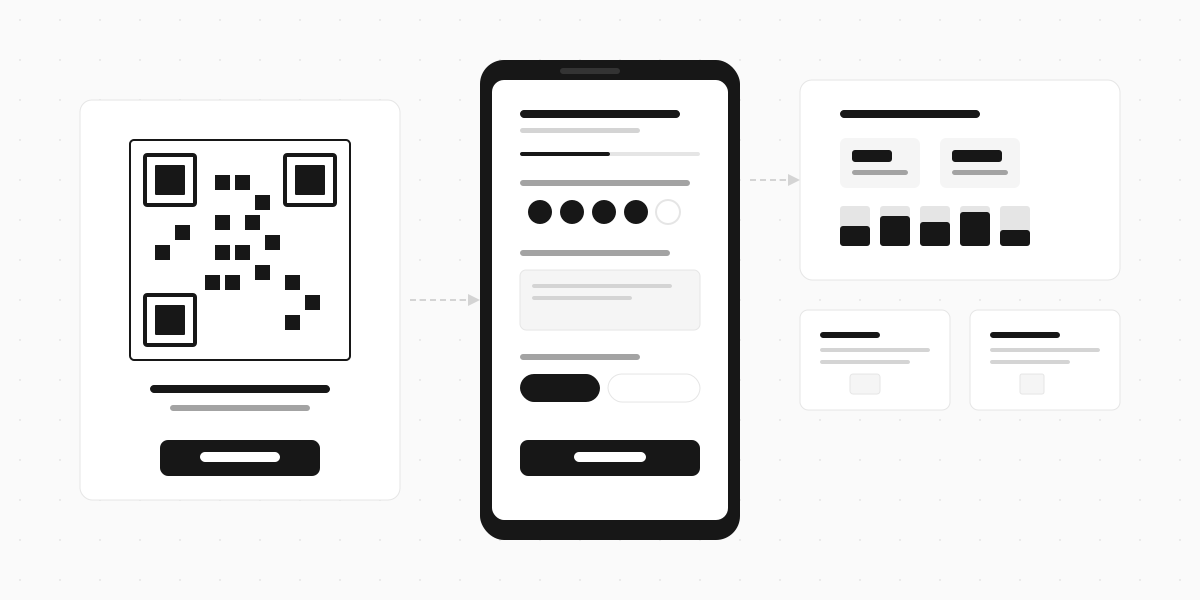
For brick-and-mortar businesses, asking face-to-face right after a positive experience is the most effective approach. The trick is making the next step easy - a QR code, a short URL, or an NFC tap that opens the review form on their phone.
What to say (and what not to say)
The ask itself
Good asks are specific and low-effort:
- "Would you mind sharing what you liked about working with us? Even a sentence or two helps."
- "If you've got 30 seconds, a quick Google review would mean a lot to our small team."
- "Your experience with [specific thing] is exactly the kind of feedback that helps other customers. Would you share it?"
Bad asks are vague and demanding:
- "Please leave us a 5-star review!" (don't specify the rating)
- "It would mean the world to us if you could write a detailed review." (too much effort)
- "We need more reviews to beat our competitor." (not their problem)
What the FTC says you can't do
Since October 2024, the FTC's rule on reviews and endorsements makes several common practices explicitly illegal:
- Buying or incentivising reviews - no discounts, free products, or cash in exchange for reviews
- Suppressing negative reviews - you can't filter, hide, or discourage negative feedback
- Using fake reviews - including AI-generated ones
- Review gating - asking for a rating first and only sending happy customers to the public review site
You can ask for reviews. You can make it easy. You can follow up once. But you can't pay for them, script them, or cherry-pick who gets to leave one.
Getting video reviews (not just star ratings)
Star ratings tell other customers that you're good. Video reviews show them why. A real person on camera talking about their experience is more convincing than any number of stars.
The challenge is that most people think "review" means typing a few sentences on Google. If you want video reviews, you need to ask specifically and make the recording process dead simple.
How to get video reviews:
- Ask for something specific - "Could you share a 30-second video about how [product] helped with [specific outcome]?" beats "leave us a video review"
- Make recording easy - send a direct link where they can record immediately, no downloads or accounts
- Give them prompts - "What problem were you trying to solve?" and "What surprised you?" are easier to answer than an open-ended "tell us about your experience"
- Keep it short - cap recordings at 60-90 seconds. People are more willing to record when they know it won't take long
For more on collecting video feedback specifically, the guide on how to collect video testimonials covers the full workflow.
Building a review system that runs itself
One-off asks don't scale. You need a repeatable process.
| Component | What to set up |
|---|---|
| Trigger | Define the moment that fires the ask (purchase complete, support ticket resolved, 30-day mark) |
| Channel | Match the channel to the customer (email for B2B, SMS for local services, video for high-value accounts) |
| Follow-up | One reminder 5-7 days later if they haven't responded. Never more than one |
| Tracking | Track ask-to-review conversion rate by channel and timing to optimise over time |
| Response | Reply to every review - positive or negative. It shows you're paying attention |
The businesses with the most reviews aren't the ones with the best products. They're the ones with a system that asks every happy customer at the right moment through the right channel.
Start with your happiest customers
You don't need hundreds of reviews overnight. Start with the customers who've already told you they're happy - the ones who replied to a support email with "thanks, this is great," or who renewed without hesitation, or who referred a friend.
Send them a personal ask. A short video or a quick email. Make it easy. Don't overthink it.
The 83% stat from BrightLocal is real - most people will leave a review if you ask. The gap between businesses with lots of reviews and businesses with none isn't product quality. It's whether anyone built the habit of asking.